

Key points
Mandarin essential oil is cold-expressed from the peel of the mandarin tree (Citrus reticulata); its leaves give a second oil, mandarin petitgrain. Calming and sedative, it soothes anxiety and promotes sleep. The peel oil is photosensitizing: no sun exposure after applying it. It is not recommended during the first 3 months of pregnancy.
Overview
The mandarin tree offers a major anti-stress essential oil. Its scent is often preferred to that of bitter orange (which yields neroli and petitgrain bigarade essential oils), and it is just as relaxing and calming.
Benefits
Mandarin peel essential oil is a powerful sedative, which tempers the autonomic nervous system (in case of dystonia, i.e., disorders of vital functions of nervous origin). It is calming and acts effectively on states of anxiety or excitation, and on insomnia problems. On the digestive level, it calms bloating, aerophagia, heaviness after meals, and constipation problems.
Taken internally, it also has a fat-burning effect, like all citrus peels (Citrus). It can also be used externally, combined with a vegetable oil base, for an anti-cellulite massage.
Mandarin leaf (or petitgrain) essential oil is remarkably calming and antispasmodic, even antidepressant. On the psychic level, it soothes states of anxiety and overwork. Its scent is very soothing and quickly provides a feeling of serenity. It also relieves problems of aerophagia and heaviness after meals. Finally, it calms the sympathetic nervous system, particularly at the cardiovascular level.
Properties
- Anti-cellulite
- Antidepressant
- Antispasmodic
- Anti-stress
- Calming
- Digestive
- Lipolytic
- Relaxing
- Sedative
How to use mandarin essential oil
By mouth, internal use
Internal use
Full text
Take 1 to 2 drops 3 times a day in a teaspoon of honey, olive oil, or almond butter, or on a breadcrumb or an acerola tablet. For example, swallow 1 to 2 drops of mandarin peel essential oil in a teaspoon of honey in the evening, half an hour before bedtime, to promote sleep. To be repeated for 7 days.
On the skin, external use
On the skin
Full text
They are also calming when diffused or inhaled, to promote relaxation and sleep.
Massage
- Diluted to 20%
Full text
Mandarin petitgrain or peel essential oils can be diluted to 20% to make a relaxing massage oil.
Recipe
For a relaxing massage oil
- Massage
Ingredients
- Other ingredient3 mlof mandarin petitgrain EO
- Essential oil3 mlof fine lavender EO
- Essential oil3 mlof ylang-ylang EO
- Essential oil3 mlof ravintsara EO
Directions
- Apricot kernel vegetable oil (Prunus armeniaca), in a sufficient quantity to fill a 60 ml bottle
- For adults only (not during pregnancy, breastfeeding or for asthma sufferers), massage a few drops of this blend into the solar plexus, the nape of the neck and the upper back, in the evening or in case of nervous tension, avoiding the face.
Full text
For a relaxing massage oil:
3 ml of mandarin petitgrain EO
3 ml of fine lavender EO
3 ml of ylang-ylang EO
3 ml of ravintsara EO
Apricot kernel vegetable oil (Prunus armeniaca), in a sufficient quantity to fill a 60 ml bottle
For adults only (not during pregnancy, breastfeeding or for asthma sufferers), massage a few drops of this blend into the solar plexus, the nape of the neck and the upper back, in the evening or in case of nervous tension, avoiding the face.
Possible combinations
With other relaxing EOs, such as those of bitter orange petitgrain (Citrus aurantium, leaves), ravintsara (Cinnamomum camphora ct 1,8 cineole), basil (Ocimum basilicum), fine lavender (Lavandula angustifolia), and ylang-ylang (Cananga odorata).
Mandarin essential oil contraindications
External use of the peel essential oil is strictly advised against before sun exposure, as it is photosensitizing. Pure, it can also be irritating to sensitive skin. Not recommended during the first 3 months of pregnancy.
Related concerns
The plant and its history
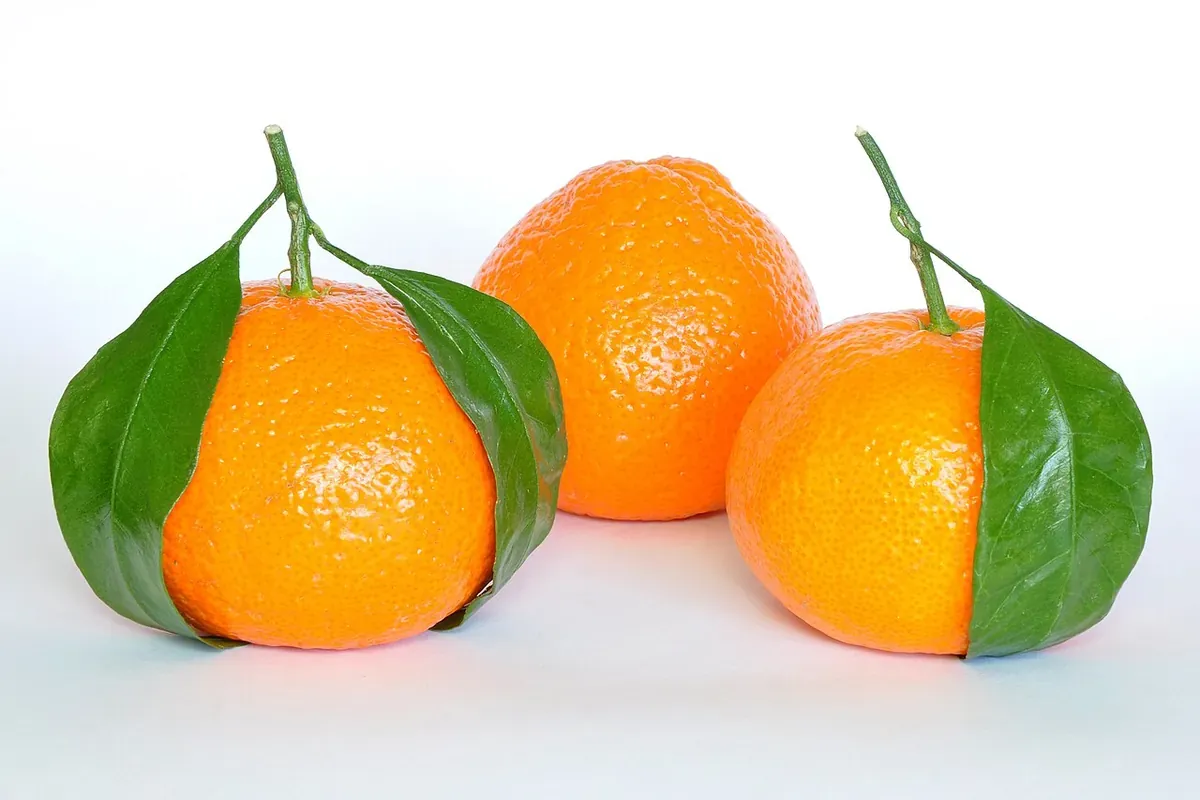
Like the bitter orange tree, the mandarin tree is a small evergreen tree with oval, shiny dark green leaves. Its white 5-petaled flowers exhale a sweet fragrance. The mandarin (5 to 8 cm in diameter), usually orange in color, has a thin peel and contains numerous seeds. There are also green mandarins and red mandarins, which yield essential oils with a more pronounced scent. Native to southern China, the mandarin tree later spread throughout Asia. During holidays, its fruit was given as a gift to Chinese mandarins, who gave it its name. In the early 19th century, it was imported into Europe, first to England, then to the Mediterranean regions.
Profile
| Distilled parts | The peel, by cold expression, and the leaves (or petitgrain) |
|---|---|
| Producing countries | Native to China, it is produced throughout the Mediterranean basin and subtropical regions |
| Color | Yellow-green to red |
| Smell | Peel EO: fruity, tangy, pungent; Leaf EO: floral and tangy note |
| Price range | € |
| Active ingredients | Peel EO: monoterpenes (limonene 70-80%, y-terpinene 15%, a-pinene, a-thujene), traces of terpenols, esters, aldehydes, and coumarins Leaf (or petitgrain) EO: esters (methyl anthranilate 50%), monoterpenes (y-terpinene 25%, limonene 10%, paracymene 5%, a-thujene, a-pinene), sesquiterpenes (B-caryophyllene) |
Frequently asked questions
Mandarin peel or mandarin petitgrain: which oil is which?
The mandarin tree gives two oils. The peel oil is a powerful sedative that acts on anxiety, excitation and insomnia, and calms bloating and heaviness after meals. The leaf oil, or petitgrain, is calming and antispasmodic, even antidepressant: it soothes anxiety and overwork, and its scent quickly brings a feeling of serenity.
What is the difference between red and green mandarin oil?
The mandarin is usually orange, but there are also green and red mandarins. According to its page, they yield essential oils with a more pronounced scent. The page gives no other difference.
Does mandarin essential oil help you sleep?
Its page describes it as calming and useful for insomnia. It suggests swallowing 1 to 2 drops of mandarin peel essential oil in a teaspoon of honey in the evening, half an hour before bedtime, for 7 days. Diffused or inhaled, it also promotes relaxation and sleep.
How do you make a relaxing massage oil with mandarin?
Its page gives 3 ml of mandarin petitgrain, 3 ml of true lavender essential oil, 3 ml of ilang-ilang and 3 ml of Madagascar camphor tree, topped up with apricot kernel oil to fill a 60 ml bottle. For adults only: massage a few drops into the solar plexus, the nape of the neck and the upper back, in the evening or in case of nervous tension, avoiding the face. This blend is not for pregnancy, breastfeeding or people with asthma.
Is mandarin oil photosensitizing?
Yes, the peel oil is: its external use is strictly advised against before sun exposure. Neat, it can also irritate sensitive skin, so dilute it, for example at 20% in a massage oil.
Which oils pair well with mandarin essential oil?
Its page pairs it with other relaxing oils: petitgrain bigarade (Bitter orange essential oil), ravintsara, basil, lavender and ylang-ylang. In a diffuser, the sweet orange page combines it with other citrus oils, and the Roman chamomile essential oil page lists mandarin petitgrain among the oils to use against stress and anxiety.