

Key points
Ravintsara essential oil (Cinnamomum camphora ct cineole) comes from a tree in Madagascar. Its page calls it the go-to oil for the flu and viral diseases; it also stimulates the immune system and prepares the body for sleep. It has no known contraindications, but it is not recommended during pregnancy, for people with asthma or under 3.
Overview
A tree from Madagascar, ravintsara is now the go-to oil for the flu, indispensable in any first-aid kit. Its growing popularity, following the latest flu epidemics, requires a certain vigilance regarding the quality of production.
Benefits
A well-known antiviral essential oil today, ravintsara essential oil is indicated for all viral diseases such as flu, shingles, herpes, infectious mononucleosis, viral hepatitis A and B, and gastroenteritis. It is the go-to oil for the flu, both for prevention and once it has set in, and its use in diffusion is highly recommended during epidemics.
It is also a general immune system stimulant, indicated even for individuals suffering from severe immunodeficiency. Thanks to its antibacterial, mucolytic, and expectorant effects, it is suitable for bronchitis, sinusitis, or rhinopharyngitis.
Due to its stimulating action on the lymphatic system, it can be useful for congestion, stasis, or heavy legs.
It is also highly soothing and prepares the body for sleep, helping to prevent insomnia. On a psychological level, it is recommended for nervous exhaustion, fatigue, or even depression. It is a good neurotonic and intellectual stimulant.
Properties
- Antibacterial
- Anti-flu
- Antiviral
- Calming
- Regenerating
- Expectorant
- Mucolytic
- Neurotonic
- Preventive
- Immunostimulating
- Intellectual stimulant
- Lymphotonique
How to use ravintsara essential oil
By mouth, internal use
Internal use
Full text
Take 1 to 2 drops 3 times a day in a teaspoon of honey, olive oil, or almond butter, or on a piece of bread crumb or an acerola tablet, for 7 days.
On the skin, external use
On the skin
Full text
During flu epidemics, it can be regularly diffused into the air.
Massage
- Diluted to 20%
Full text
Dilute to 20% in a massage oil, and apply twice a day to the chest and back, or behind the ears.
Massage
- Undiluted
Full text
It is possible to massage with a few pure drops along the spine in cases of extreme fatigue, convalescence, or viral infection.
Possible combinations
With other antiviral and antibacterial EOs such as niaouli (Melaleuca quinquenervia), tea tree (Melaleuca alternifolia)... or phenol-rich EOs (compact oregano or Spanish oregano, thymol thyme...).
Ravintsara essential oil contraindications
No known contraindications, but it is not recommended during pregnancy, for people with asthma or for children under 3. As an alternative to ravintsara, you may prefer mandravasarotra or saro (Cinnamosma fragrans), also native to Madagascar, which has very similar active ingredients and a more tonic flavor.
Other use
To soothe and prepare for sleep, especially in cases of difficulty falling asleep, apply 1 pure drop to the inside of the wrists and the solar plexus. For children, apply 1 drop to the arch of the foot before bedtime.
Related concerns
The plant and its history
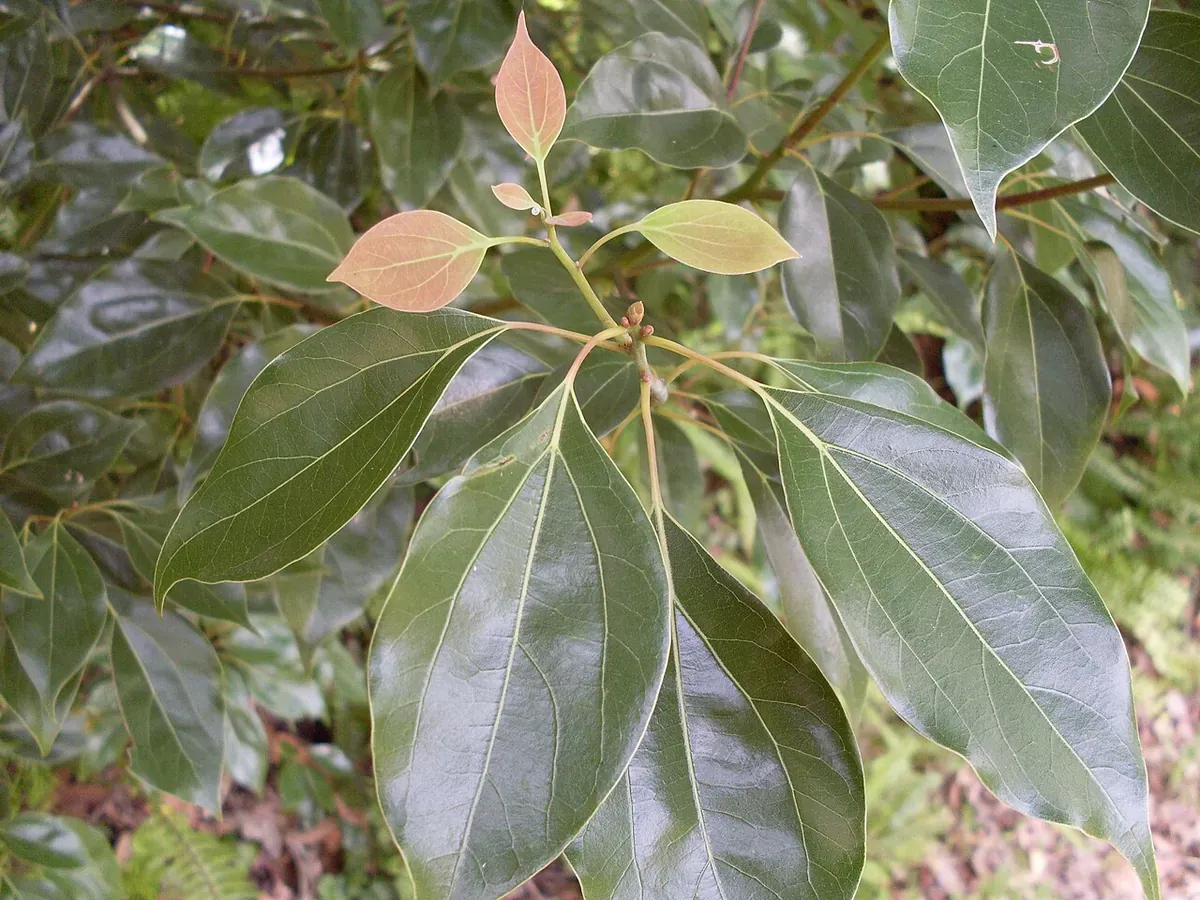
Ravintsara is a Malagasy variety of the camphor tree (Cinnamomum camphora). Imported from Taiwan to Madagascar 250 years ago, it has adapted perfectly to the climate. Ravintsara (from 'ravina', leaf, and 'tsara', good in Malagasy) is a tree reaching up to 20 m in height, with reddish bark and large, shiny green, oval, and highly fragrant evergreen leaves. It produces an active ingredient (cineole) that is different from the camphor found in other camphor trees, but identical to that of eucalyptus. Ravintsara essential oil also differs from Ho wood essential oil, native to China, which is another chemotype of the camphor tree that produces linalool... just like South American rosewood (Aniba rosaeodora)! Ravintsara should also not be confused with ravensara (Ravensara aromatica), which has different properties.
Profile
| Distilled parts | Leaves |
|---|---|
| Producing countries | Madagascar |
| Color | Colorless |
| Smell | Fresh, cineolic (eucalyptol) |
| Price range | € |
| Active ingredients | Oxides (1,8-cineole 50 to 55%), monoterpenes (sabinene 15%, alpha- and beta-pinene 3 to 5%, myrcene, gamma-terpinene), monoterpenols (alpha-terpineol 8%, terpinen-4-ol), sesquiterpenes (alpha- and beta-caryophyllene, patchoulene...) |
Frequently asked questions
How do you take ravintsara oil by mouth?
Take 1 to 2 drops 3 times a day in a teaspoon of honey, olive oil or almond butter, or on a breadcrumb or an acerola tablet, for 7 days.
Does ravintsara essential oil have side effects?
Its page lists no known contraindications, but it advises against ravintsara during pregnancy, for people with asthma and for children under 3. As an alternative to ravintsara, it mentions mandravasarotra, or saro (Cinnamosma fragrans), also from Madagascar, with very similar active ingredients and a more tonic flavor.
How do you use ravintsara for the flu?
Its page cites it for the flu, both for prevention and once it has set in, and for bronchitis, sinusitis and rhinopharyngitis. During epidemics, diffuse it regularly into the room; the lemon essential oil page also describes diffusion to cleanse the air during an epidemic. On the skin, dilute it to 20% in a massage oil and apply twice a day to the chest and back, or behind the ears.
Are ravintsara and ravensara the same oil?
No. Ravintsara is a Malagasy variety of the camphor tree (Cinnamomum camphora). Ravensara (Ravensara aromatica) is another plant, with different properties. Ravintsara also differs from Ho wood, another chemotype of the camphor tree, native to China, which produces linalool rather than cineole.
Does ravintsara help you sleep?
Its page describes it as highly soothing: it prepares the body for sleep, especially in cases of difficulty falling asleep. Apply 1 neat drop to the inside of the wrists and the solar plexus. For children over 3, apply 1 drop to the arch of the foot before bedtime. The mandarin oil page blends it with true lavender and ylang-ylang in a relaxing massage oil for adults.
Which essential oils go well with ravintsara?
Against viruses and bacteria, its page pairs it with niaouli, tea tree or phenol-rich oils such as oregano or thymol thyme. The eucalyptus globulus page combines it with other respiratory oils, and the sweet marjoram essential oil page with oils that act on the nervous system.