

Key points
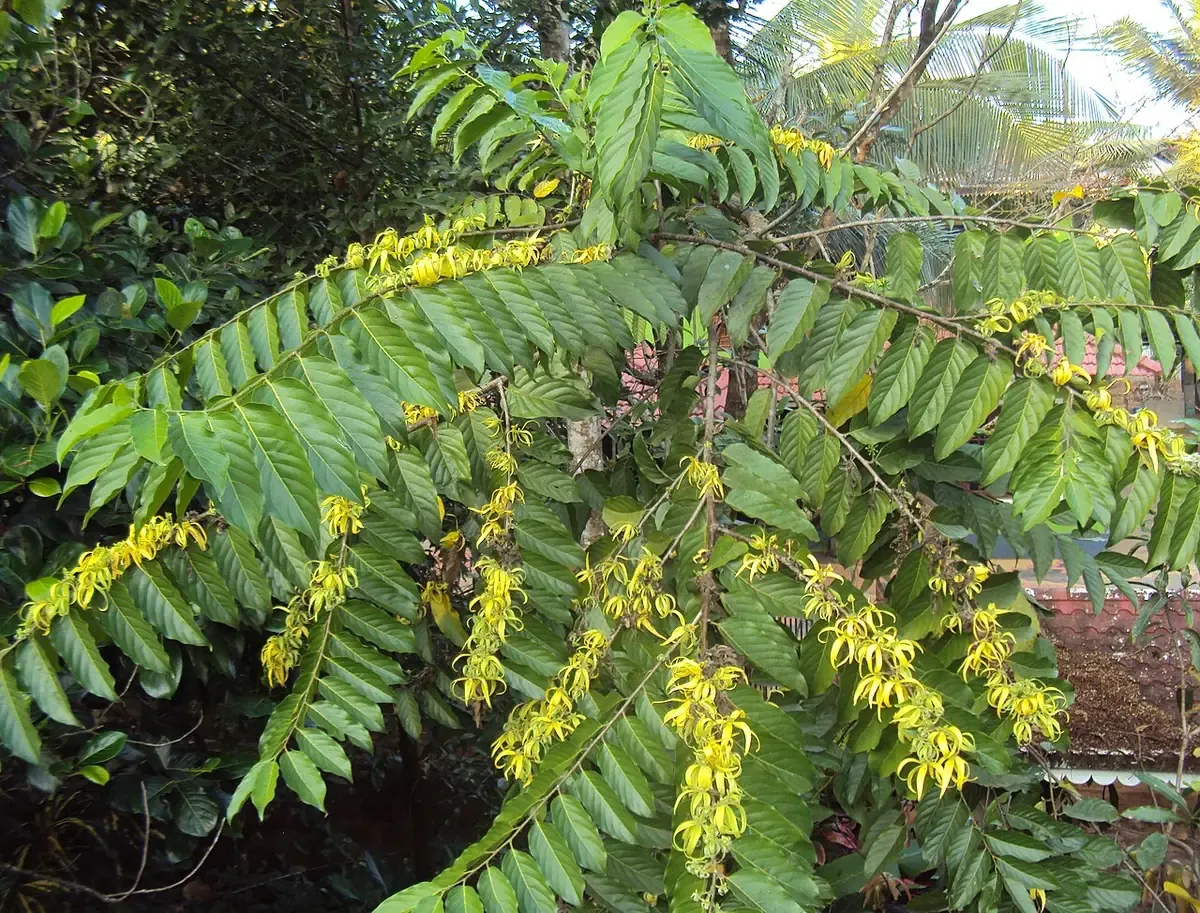
Ylang-ylang essential oil, also spelled ilang-ilang (Cananga odorata), is distilled from the flowers of a tropical tree. Calming and anxiolytic, it is recommended for stress, anxiety and insomnia. It also regulates the cardiovascular system and tones the scalp. It is not recommended during pregnancy and breastfeeding; by mouth, only on a doctor's advice.
Overview
Ylang-ylang essential oil has the fragrance of the islands: it is heady, exotic, sensual, and aphrodisiac. It regulates the cardiovascular system and lowers blood pressure. It is also an excellent hair tonic.
Benefits
Ylang-ylang essential oil regulates the cardiovascular system and lowers blood pressure. It is useful against tachycardia, extrasystoles (abnormal heart contractions), and even hypertension.
It soothes and rebalances the central and autonomic nervous systems (the latter controlling the function of our vital organs). At the psychological and emotional level, it is anxiolytic, antidepressant, and calming, and is recommended for insomnia, nervousness, stress, panic, or anxiety.
It is also a female aphrodisiac, indicated in cases of frigidity and low libido, and is furthermore a uterine muscle antispasmodic (useful for alleviating premenstrual syndrome symptoms). It is anti-inflammatory and analgesic, and is recommended for muscle spasms and contractures.
It tones the skin and scalp and promotes hair regrowth. Regenerating for the skin, it can work on stretch marks. It is also recommended in cases of skin parasitosis (scabies, ringworm... ).
Properties
- Analgesic
- Anti-inflammatory
- Antidepressant
- Uterine antispasmodic
- Anxiolytic
- Calming
- Aphrodisiac
- Hypotensive
- Cardiac regulator
- Nervous system balancer
- Skin regenerating
- Hair stimulant
- Skin tonic
How to use ylang-ylang essential oil
On the skin, external use
Massage
- Diluted to 10-20%
Full text
Dilute to 10-20% in a massage oil, or apply neat to the skin, particularly on the cardiac plexus in case of palpitations (2-3 drops).
Recipe
To tone the scalp and promote hair regrowth
Ingredients
- Other ingredient1 mlof ylang-ylang EO
- Essential oil1 mlof rosemary verbenone EO
Directions
- Castor vegetable oil (Ricinus communis) to top up a 60 ml bottle
- Apply once a day on wet hair.
Full text
To tone the scalp and promote hair regrowth:
1 ml of ylang-ylang EO
1 ml of rosemary verbenone EO
Castor vegetable oil (Ricinus communis) to top up a 60 ml bottle
Apply once a day on wet hair.
Possible combinations
To compose a sensual and soothing massage oil, it is possible to combine ylang-ylang EO with ginger EO (Zingiber officinale), cinnamon EO (Cinnamomum zeylanicum) diluted to 5-10%, rose geranium EO (Pelargonium x asperum)... in a jojoba oil vegetable base (Simmondsia chinensis), for example.
Ylang-ylang essential oil contraindications
Medical consultation recommended
It is not recommended during pregnancy and breastfeeding. It can sometimes be irritating when used neat on the skin. Internal use only on the advice of a doctor.
Related concerns
The plant and its history
Native to Southeast Asia, ylang-ylang is a tropical tree reaching up to 20 m in height in the wild. Its production was launched in 1860 in the Philippines, and today, it is mainly concentrated in the islands of the Indian Ocean (Madagascar, Reunion, and Comoros). The ylang-ylang flower is yellow and highly fragrant. In Asia, it has long been known for its traditional uses: it is used as an ointment for the beauty of the body and hair, and against skin diseases. It is picked at maturity, and 6 different essential oils are distilled over the hours: extra-superior at the start, extra after 1 hour, then 1st, 2nd, and 3rd flower up to 3, 6, and 12 hours. The totum (all the active molecules of the plant) is only obtained at the end of distillation (20 hours).
Profile
| Distilled parts | Flowers |
|---|---|
| Producing countries | Indian Ocean (Comoros, Reunion Island, Madagascar) |
| Color | Light yellow to caramel |
| Smell | Floral, heady, musky |
| Price range | €€ |
| Active ingredients | Fractional distillations, yielding different chemotypes: Extra: aromatic esters 40% (benzyl benzoate), sesquiterpenes 25% (germacrene D, B-caryophyllene), monoterpenols 15% (linalool), phenol methyl ethers 15% (para-cresol M.E.), esters 10% (geranyl acetate), sesquiterpenols 3rd flower: sesquiterpenes 55% (B-caryophyllene 15%, a-humulene 4%, germacrene D 25%, a-farnesene 10%, 6- and y-cadinene 5%), monoterpenols (linalool 4%, farnesol 3%), esters (geranyl acetate 5%, farnesyl acetate 5%), aromatic esters (methyl benzoate, benzyl benzoate 8%, benzyl salicylate 5%) |
Frequently asked questions
Ylang-ylang or ilang-ilang: which spelling is right?
Both: they are two spellings of the same oil, distilled from the yellow flowers of Cananga odorata. This tropical tree, native to Southeast Asia, is now mainly grown in the Indian Ocean (Comoros, Reunion Island, Madagascar). Its scent is floral, heady and musky.
Is ylang-ylang essential oil good for hair?
Its page says it tones the scalp and promotes hair regrowth. It gives this blend: 1 ml of ylang-ylang essential oil, 1 ml of rosemary oil with verbenone, and castor oil to fill a 60 ml bottle, applied once a day on wet hair. Rosemary is also not recommended during pregnancy and breastfeeding, or for children.
Where do you apply ylang-ylang oil?
Diluted to 10 to 20% in a massage oil, or neat on the skin. In case of palpitations, its page indicates 2 to 3 drops on the cardiac plexus; if palpitations persist or recur, ask a doctor. Neat, it can sometimes irritate the skin.
Does ylang-ylang help with sleep and anxiety?
Its page describes it as calming and anxiolytic, and recommends it for insomnia, nervousness, stress, panic and anxiety. It is also part of the relaxing massage oil on the mandarin page, with mandarin petitgrain, lavender and ravintsara, for adults only.
What can you blend ylang-ylang essential oil with?
For a sensual and soothing massage oil, its page combines it with ginger, cinnamon diluted to 5 to 10% and rose geranium, in a jojoba oil base. Cinnamon is prohibited for children under 7 and during pregnancy and breastfeeding. The bitter orange page also lists ylang-ylang among the soothing oils to blend with its oils.
Is ylang-ylang essential oil safe during pregnancy?
No. It is not recommended during pregnancy and breastfeeding. Its page also reserves internal use to the advice of a doctor: ask a doctor or pharmacist before taking it by mouth.