

Key points
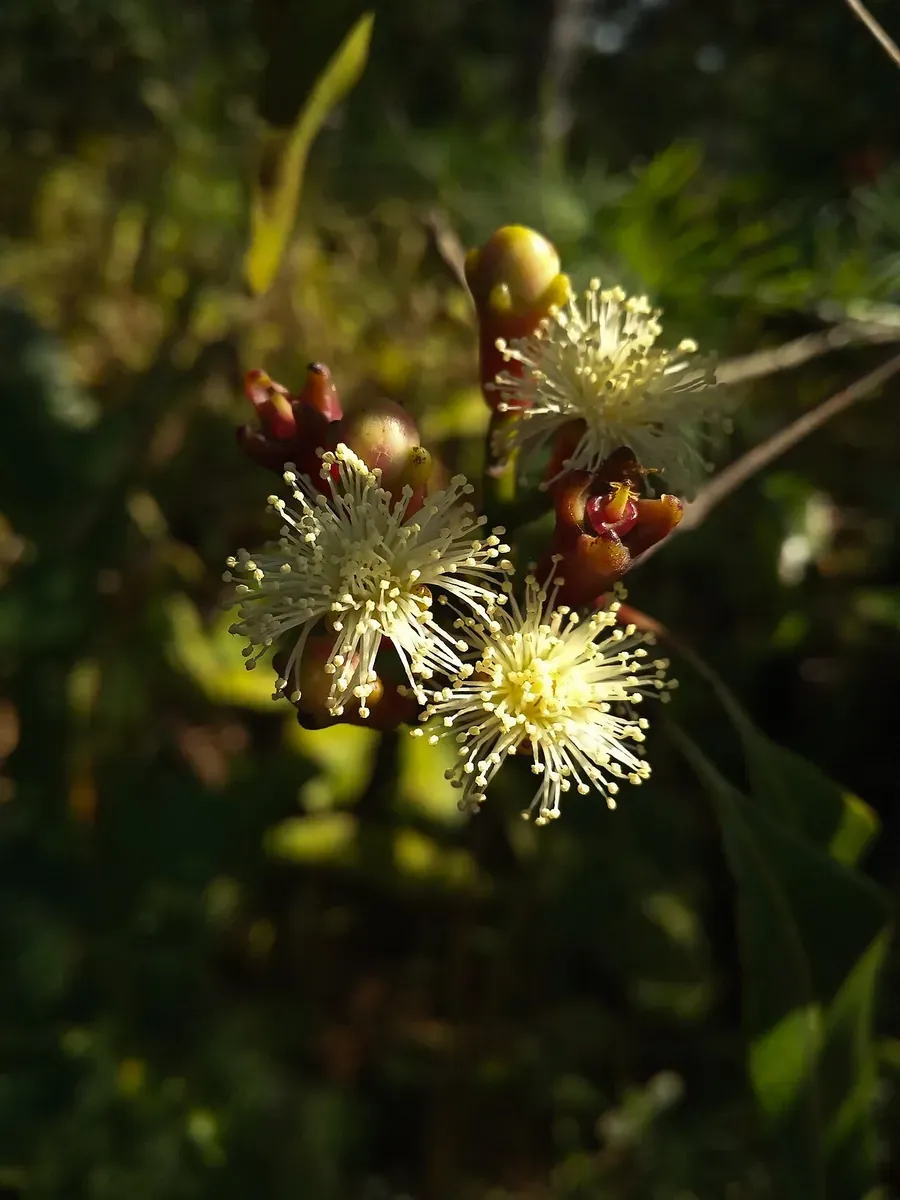
Clove essential oil comes from the clove tree (Syzygium aromaticum). Rich in eugenol, it is known for dental pain and also serves as an anti-infective and a tonic. It strongly irritates the skin: always dilute it. It is not recommended during pregnancy, breastfeeding or before age 7; by mouth, only on a doctor's advice.
Overview
A go-to oil for dental pain, clove is also a remarkable anti-infective—effective against numerous viruses and bacteria—as well as an effective anti-inflammatory and stimulating tonic.
Benefits
Thanks to its high eugenol content—which is a powerful anti-infective—clove essential oil is effective against many viral or bacterial infections. It is indicated for conditions affecting the respiratory tract (bronchitis, sinusitis, flu, and even tuberculosis), the intestines (parasites, diarrhea...), the uro-genital tract (cystitis, salpingitis...) or the skin (diluted, for shingles or herpes, fungal infections, acne, cutaneous parasitosis, scabies...). Its powerful anti-infective action can even be utilized, in association with conventional treatments, against serious infections such as amebiasis, malaria, dysentery, cholera, viral hepatitis...
It is tonic and stimulating on both intellectual and sexual levels. It can be recommended in cases of fatigue, overwork, or low blood pressure (hypotension).
Clove EO is also uterotonic, meaning that it stimulates contractions of the uterine muscle and can assist during childbirth.
It is also a first-rate dental analgesic and, when diluted, an effective anti-inflammatory for rheumatism, arthritis pain, or even neuralgia.
Properties
- Facilitates childbirth
- Dental analgesic
- Anti-infectious
- Anti-inflammatory
- General tonic
- Uterotonic
How to use clove essential oil
By mouth, internal use
Internal use
Full text
Take 1 to 2 drops 3 times a day in a teaspoon of honey, olive oil, or almond butter, on a breadcrumb or an acerola tablet, for a maximum of 7 days.
On the skin, external use
External use
Full text
Dilute in a carrier oil for local application or massage (avoid the face and do not exceed 20% dilution for the body).
Possible combinations
With turmeric (Curcuma longa), black pepper (Piper nigrum), and ginger (Zingiber officinale) essential oils, particularly for the digestive system.
Clove essential oil contraindications
Medical consultation recommended
It is not recommended during pregnancy and breastfeeding, as well as for children under 7 years old. Do not apply neat on the skin, as it is dermocaustic. Use with caution. For internal use, do not take for more than 7 days and only on the advice of a doctor.
Other use
In case of dental pain, while waiting to see a dentist, apply 1 drop of essential oil diluted in 4 drops of vegetable oil locally to the gum. In case of an abscess, see a dentist promptly. Wash your hands thoroughly before and after.
Related concerns
The plant and its history
Like many spices, clove reached us as early as the 2nd century via Eastern trade routes. It was the subject of a true commercial war in the colonies: the Dutch expelled the Portuguese from the Moluccas in 1605 and established a tight monopoly on this spice, until the French managed to establish themselves in the Indian Ocean, notably on the islands of Mauritius and Réunion. Widely used in Eastern cuisine in several spice blends, it is also used in various Western dishes and in gingerbread recipes. Indonesians use it to flavor kretek cigarettes. It has also been known since the 16th century as a dental analgesic.
Profile
| Distilled parts | The flower bud, called 'clove', the leaf, and the claw (the stem of the clove) |
|---|---|
| Producing countries | Native to the Molucca Islands and the Philippines, it is produced today in several tropical regions worldwide: Tanzania, Zanzibar, Madagascar, Brazil, and eastern India. |
| Color | Light brown |
| Smell | Spicy, warm, peppery |
| Price range | €€ |
| Active ingredients | Phenols (eugenol 80%), esters (eugenyl acetate 15%), sesquiterpenes (B-caryophyllene 5%). The stem contains the highest concentration of eugenol (> 90%) |
Frequently asked questions
Clove, clove bud, clove tree: is it the same oil?
Yes. The clove tree (Syzygium aromaticum, also called Eugenia caryophyllata) is the plant; the clove is its flower bud. Its page describes an oil distilled from the bud, the leaf and the claw, the stem of the clove. The stem holds the most eugenol, over 90%, against about 80% in the oil.
Does clove oil help a toothache?
It is its reference use: its page describes it as a first-rate dental analgesic, known as such since the 16th century. For dental pain, while waiting to see a dentist, apply to the gum 1 drop of essential oil diluted in 4 drops of vegetable oil. In case of an abscess, see a dentist promptly. Wash your hands thoroughly before and after.
What are the risks of clove essential oil?
It calls for caution. It is dermocaustic: never apply it neat to the skin. It is not recommended during pregnancy and breastfeeding, nor for children under 7. Its page also describes it as uterotonic: it stimulates contractions of the uterus. By mouth, do not take it for more than 7 days, and only on the advice of a doctor.
How do you dilute clove essential oil?
In a vegetable oil, for local application or massage, at 20% at most on the body, and never on the face. Diluted, it is used for rheumatism, arthritis pain and neuralgia, and on the skin for herpes, fungal infections or acne. By mouth: 1 to 2 drops 3 times a day in a teaspoon of honey, olive oil or almond butter, for 7 days at most, on a doctor's advice.
Which other oils are used for the teeth and mouth?
Two other pages cover it. The helichrysum essential oil page also gives, for toothache while waiting for the dentist, 1 drop diluted in 4 drops of vegetable oil on the gum. The tea tree essential oil page lists oral-dental conditions: mouth ulcers, gingivitis, tooth abscess. Each has its own precautions: helichrysum, for example, is to be avoided with anticoagulants.
Can clove oil help with fatigue?
Its page describes it as tonic and stimulating, on both intellectual and sexual levels, and recommends it for fatigue, overwork or low blood pressure. The pages of exotic basil, for fatigue and overwork, and of rosemary essential oil with cineole, a psychic tonic, claim similar uses.