

Key points
Wintergreen essential oil comes from eastern teaberry (Gaultheria procumbens) or fragrant wintergreen (G. fragrantissima). Made of 99% methyl salicylate, it is an anti-inflammatory and analgesic through the skin: cramps, tendinitis, osteoarthritis. Apply it diluted. Avoid it with an aspirin allergy, during pregnancy and breastfeeding, and before age 7.
Overview
Native either to North America (for eastern teaberry) or Nepal (for fragrant wintergreen), wintergreen essential oil is a well-known anti-inflammatory, recognizable by its characteristic Russian leather scent. It is ideal for cramps or tendinitis.
Benefits
Wintergreen essential oil is a highly effective anti-inflammatory and a percutaneous analgesic. It is an indispensable tool for alleviating a wide range of pain, such as muscle spasms, cramps, tendinitis, osteoarthritis, or even rheumatoid arthritis. It can also relieve headaches (tension headaches and migraines), especially when they originate from liver problems.
Fragrant wintergreen (G. fragrantissima) is believed to have a draining effect on the kidneys and gallbladder, and is indicated for preventing stones. Eastern teaberry (G. procumbens) has a regenerative action on the liver.
Powerfully antispasmodic, eastern teaberry (G. procumbens) can also act on cardiovascular disorders (high blood pressure, arteriosclerosis, coronary arteritis, pericarditis...), while fragrant wintergreen (G. fragrantissima) can particularly relieve renal colic.
Properties
- Analgesic
- Anti-inflammatory
- Antirheumatic
- Antispasmodic
- Hepato-biliary draining
- Renal draining
- Liver regenerating
- Hepatostimulant
How to use wintergreen essential oil
On the skin, external use
External use
Full text
Preferably apply diluted in a carrier oil (20% for the body), especially St. John's Wort oil (Hypericum perforatum) - avoiding sun exposure - or Arnica oil (Arnica montana).
Recipe
For an anti-tendinitis massage oil, with the following essential oils
- Massage
Ingredients
- Essential oil3 mllemon eucalyptus EO
- Other ingredient3 mlwintergreen EO
- Other ingredient3 mljuniper EO
Directions
- Arnica oil, sufficient quantity to complete a 60 ml bottle
- Apply locally twice a day for 7 days.
Full text
For an anti-tendinitis massage oil, with the following essential oils:
3 ml lemon eucalyptus EO
3 ml wintergreen EO
3 ml juniper EO
Arnica oil, sufficient quantity to complete a 60 ml bottle
Apply locally twice a day for 7 days.
Possible combinations
For an anti-inflammatory synergy, with katrafay (Cedrelopsis grevei), lemon eucalyptus (Eucalyptus citriodora), helichrysum (Helichrysum italicum), and juniper (Juniperus communis) essential oils, in arnica oil (Arnica montana) or St. John's Wort oil (Hypericum perforatum).
Wintergreen essential oil contraindications
Medical consultation recommended
Allergies to salicylates (aspirin and equivalents). Avoid applying undiluted, as it can be irritating to sensitive skin. It is also not recommended for pregnant or breastfeeding women and children under 7 years of age. Internal use should only be done under the advice of a doctor.
The plant and its history
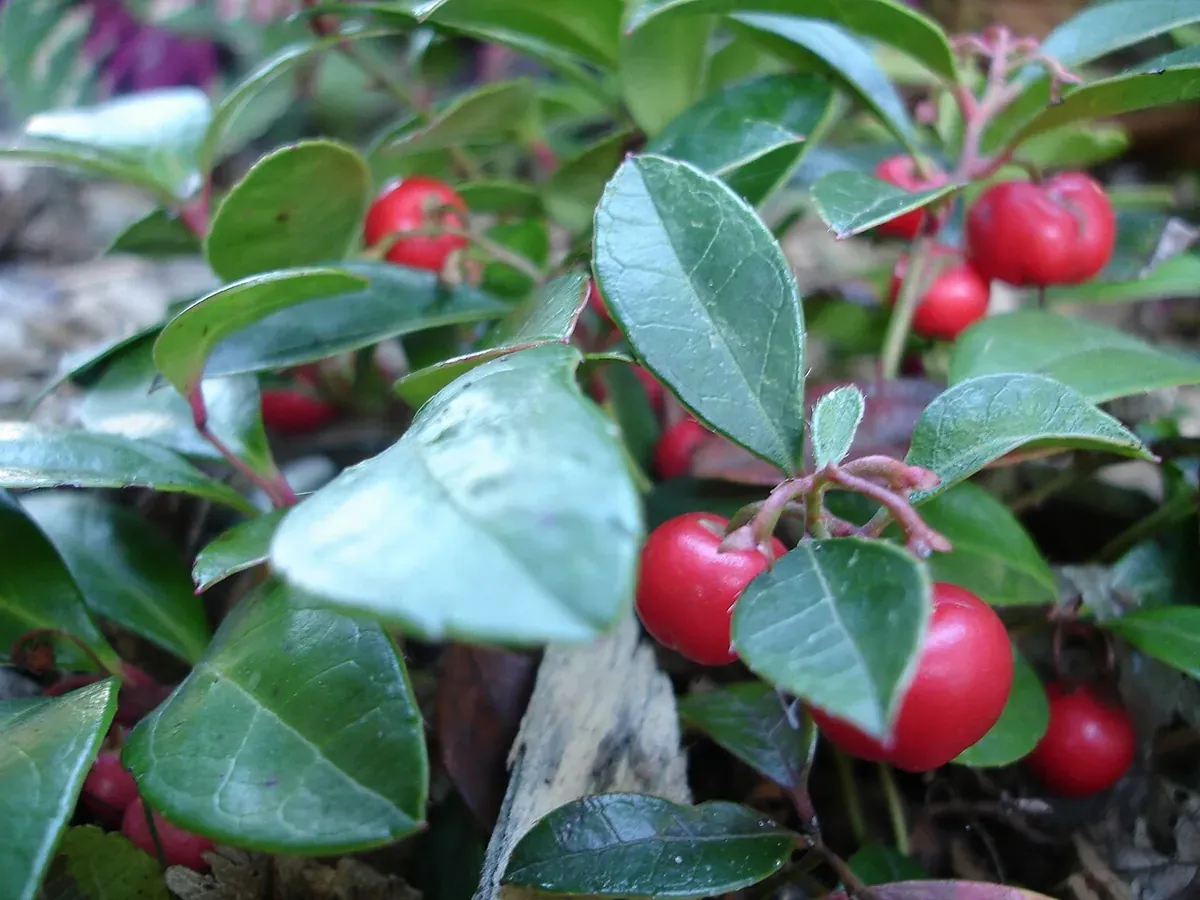
Eastern teaberry (Gaultheria procumbens) is a plant well known to Native Americans, who traditionally used it for pain and fevers. Fragrant wintergreen (G. fragrantissima), native to Nepal, has similar virtues. These creeping shrubs (15-20 cm), close relatives of heathers and blueberries, thrive in wet areas and acidic soils. They bear evergreen, green, oval leaves, and white bell-shaped flowers, which yield bright red berries. The aspirin-like smell released when the leaves are crushed is the same as that of flowering meadowsweet; it comes from the salicylate molecule, from which aspirin is derived, which is also present in the bark of white willow (Salix alba) and yellow birch (Betula alleghaniensis) of North America.
Profile
| Distilled parts | Leaves |
|---|---|
| Producing countries | Nepal (G. fragrantissima), North America (G. procumbens) |
| Color | Pale yellow to red |
| Smell | Phenolic and medicinal, Russian leather |
| Price range | € |
| Active ingredients | Esters (99% methyl salicylate) |
Frequently asked questions
Eastern teaberry or fragrant wintergreen: what is the difference?
Eastern teaberry (Gaultheria procumbens) comes from North America, fragrant wintergreen (G. fragrantissima) from Nepal. Both are small creeping shrubs, related to heathers and blueberries, and give an oil with similar virtues. Its page credits eastern teaberry with a regenerative action on the liver, and fragrant wintergreen with a draining effect on the kidneys and an action on renal colic.
Does wintergreen oil help with muscle pain?
It is its main use. Its page describes it as an anti-inflammatory and an analgesic through the skin, for muscle spasms, cramps, tendinitis and osteoarthritis. It gives an anti-tendinitis massage oil: 3 ml of wintergreen, 3 ml of Eucalyptus citriodora and 3 ml of juniper, topped up with arnica oil for a 60 ml bottle. Apply locally twice a day for 7 days.
Wintergreen oil and aspirin allergy: what is the risk?
Do not use it if you are allergic to salicylates, that is, to aspirin and its equivalents. The oil is almost entirely methyl salicylate, a salicylate molecule: it is what gives the crushed leaves their aspirin-like smell.
Is wintergreen essential oil safe to use?
It calls for precautions. Neat, it can irritate sensitive skin: apply it diluted. It is not recommended during pregnancy and breastfeeding, nor for children under 7. Its page gives no use by mouth: internal use only on the advice of a doctor, and ask a doctor or pharmacist before using it.
What can you mix wintergreen oil with?
Its page advises diluting it to 20% in a vegetable oil, preferably arnica oil, or St. John's wort oil while avoiding the sun afterwards. In anti-inflammatory synergy, it pairs it with katrafay, lemon eucalyptus, helichrysum and juniper. The Rosmarinus officinalis page also cites it, with camphor rosemary, for a muscle-relaxing massage.
Can wintergreen oil help with headaches?
Its page says it can relieve tension headaches and migraines, especially when they come from a liver problem. It gives no specific method for this use. The peppermint oil page also cites migraines, with its own precautions.