

Key points
May chang essential oil is another name for lemon litsea (Litsea citrata, also Litsea cubeba), distilled from the fruits of a tropical Asian tree. Soothing and sedative, it is a go-to oil for insomnia, and its anti-inflammatory action serves the skin. Always dilute it: neat, it can irritate. Avoid it in the first 3 months of pregnancy and under 7.
Overview
Also called Yunnan verbena—because its essential oil is very close to that of lemon verbena or lemon balm—lemon litsea shares the same calming properties at a much more affordable price. It is also an excellent anti-inflammatory.
Benefits
Lemon litsea essential oil has a chemical profile very close to that of lemon verbena (Lippia citriodora), though less subtle. And it is less expensive because its distillation offers a better yield. In any case, lemon litsea essential oil is also remarkably soothing, sedative, and antispasmodic. A go-to oil for insomnia, it prepares you for sleep. It also balances the nervous system: it regulates emotions and restores a smile.
Anti-inflammatory, it is indicated for intestinal inflammation (colitis, for example), joint and muscle pain (tendonitis, arthritis), or even insect bites, which it effectively relieves.
It is also a go-to oil for the skin, recommended for fungal infections and candidiasis, or acne. Insecticidal, it repels mosquitoes, like citronella.
Properties
- Anti-inflammatory
- Antifungal
- Antispasmodic
- Anti-stress
- Calming
- Insecticide
- Insect repellent
- Sedative
- Nervous system balancer
How to use lemon litsea (may chang) essential oil
By mouth, internal use
Internal use
Full text
Take 2 drops 2 to 3 times a day in a teaspoon of honey, olive oil, or almond butter, or on a piece of bread crumb or an acerola tablet, for 7 days.
On the skin, external use
On the skin
Full text
Diffuse it as well to create a very relaxing atmosphere.
Massage
- Diluted to 20%
Full text
Dilute it to 20% in a massage oil, including for local application, as it can irritate the skin. It is very effective on fungal infections, especially on the feet.
Possible combinations
With essential oils of citronella (Cymbopogon nardus), rose geranium (Pelargonium x asperum), lemongrass (Cymbopogon flexuosus), lemon eucalyptus (Corymbia citriodora), or wintergreen (Gaultheria fragrantissima), as they share antispasmodic, anti-stress, anti-inflammatory, and even insect-repelling properties (except wintergreen).
Lemon litsea (may chang) essential oil contraindications
It can be irritating when used neat on the skin. It is therefore recommended to dilute it. Not recommended during the first 3 months of pregnancy and for children under 7 years of age.
Other use
In case of difficulty falling asleep, apply 1 drop diluted in 4 drops of vegetable oil to the solar plexus, lower abdomen, inside of the wrists or the soles of the feet to promote sleep.
Related concerns
The plant and its history
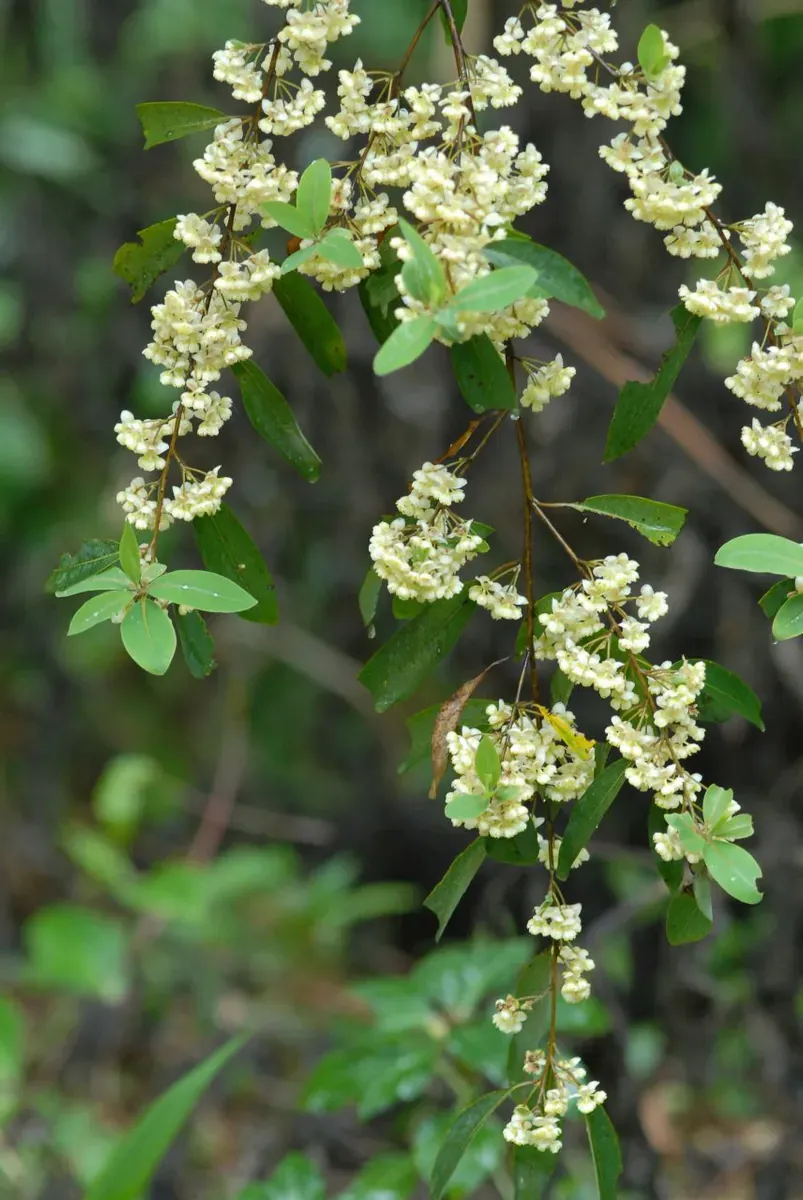
Native to the forests of tropical regions of China, Vietnam, and Taiwan—where it grows wild—lemon litsea or Yunnan verbena is a medium-sized (5 to 12 m), evergreen tree with alternate and lanceolate leaves. Its cream-colored flowers yield small fruits covered with a thin rind, shaped like cubeb peppercorns, hence its other Latin name, Litsea cubeba. They contain a pulp whose distillation yields an essential oil close to that of lemongrass. China produces about 1,000 tons per year. Lemon litsea is also used as a spice among certain aboriginal peoples of Taiwan.
Profile
| Distilled parts | Fruits |
|---|---|
| Producing countries | Tropical Asia, China, Taiwan, Vietnam |
| Color | Light yellow |
| Smell | Fresh, lemony, characteristic of lemon verbena or lemon balm |
| Price range | € |
| Active ingredients | Aldehydes (citrals: neral 30-35%, geranial 40%, citronellal 2%, isocitral), monoterpenes (10%: limonene, myrcene), monoterpenols 5-10% (linalool, geraniol, nerol), sesquiterpenes, ketones (methyl heptenone 3%), oxides (1,8-cineole), esters (traces) |
Frequently asked questions
Are may chang, litsea cubeba and exotic verbena the same oil?
Yes. Litsea citrata (or Litsea cubeba) is also called Yunnan verbena, exotic verbena or may chang. It is not lemon verbena (Lippia citriodora), but its oil has a very close chemical profile, though less subtle. It is also less expensive, because its distillation gives a better yield.
Does may chang essential oil help you fall asleep?
Its page makes it a go-to oil for insomnia: it prepares you for sleep and regulates emotions. In case of difficulty falling asleep, apply 1 drop diluted in 4 drops of vegetable oil to the solar plexus, the lower abdomen, the inside of the wrists or the soles of the feet.
Can you use litsea oil in a diffuser?
Yes: its page recommends diffusing it to create a very relaxing atmosphere. Its scent is fresh and lemony, close to that of lemon verbena or lemon balm. It is also insecticidal and repels mosquitoes.
How do you apply litsea cubeba oil to the skin?
Always diluted, at 20% in a massage oil, even for a local application: neat, it can irritate the skin. Its page recommends it for fungal infections, especially on the feet, candidiasis and acne. Anti-inflammatory, it also relieves insect bites and joint or muscle pain such as tendonitis.
What blends well with may chang essential oil?
Its page pairs it with citronella, rose geranium essential oil, lemongrass, lemon eucalyptus or wintergreen oil (Gaultheria fragrantissima). They share antispasmodic, anti-stress and anti-inflammatory properties, and all but wintergreen repel insects. Wintergreen is not recommended during pregnancy and breastfeeding or for children under 7.
Is may chang oil safe during pregnancy and for children?
It is not recommended during the first 3 months of pregnancy or for children under 7. By mouth, its page gives 2 drops 2 to 3 times a day in a teaspoon of honey, olive oil or almond butter (or on a breadcrumb or an acerola tablet), for 7 days.